Starting with the enforcement file
The underlying loans totalled RMB 100,000. The creditor obtained a judgment for repayment and interest, but enforcement remained difficult. Shanghai Shenxin Law Firm’s team communicated with the enforcement judge and reviewed the court file to understand the position. The task was to identify what had actually been investigated and which questions still required a concrete response.
A file review is useful because an enforcement case contains more than its latest description as difficult or stalled. Search results, existing measures and the information surrounding a proposed disposal may point in different directions. In this matter, the review enabled the team to frame the problem more precisely and bring specific recommendations to the court, instead of relying on a general request for greater enforcement effort.
Three connected questions, rather than one general obstacle
The review brought three questions into focus. First, whether further inquiry could develop the available asset information. Second, whether the preserved property offered a realistic prospect of recovery through auction. Third, what concrete work could still advance the matter as closure of the current enforcement procedure was approaching. Each question required a different kind of analysis.
Treating these issues separately helped clarify how they related to one another. The existence of property did not settle whether an auction was the best immediate step, and difficulty with a proposed sale did not answer the questions raised by account activity. The strategy therefore needed to consider information, realisation prospects and procedural engagement together, while keeping the creditor’s actual recovery as the common objective.
A targeted proposal concerning active accounts
The asset-search feedback contained accounts showing activity. The team proposed applying for a lawyer investigation order to conduct a deeper, targeted inquiry into those accounts. This was a focused recommendation based on a lead already present in the file, rather than an open-ended assumption that some undiscovered asset must exist.
An active account is a lead requiring examination, not a conclusion about how much money can be recovered. A useful investigation would seek to clarify the activity relevant to the obligation and the next procedural step. The recommendation gave the court a specific direction to consider, connecting the existing search feedback with an identifiable line of further inquiry rather than leaving the asset question at a general level.
Assessing whether the property could realistically sell
The team also conducted local market research concerning the preserved property and its surroundings. That work indicated a high risk that the property would fail to attract a successful bid. The team therefore recommended pausing the auction route before proceeding further, bringing the likely market response into the decision about how to advance enforcement.
The distinction between identifying an asset and realising its value matters in enforcement. A proposed sale needs to be considered in its actual market setting. The decision about the next step should take account of the likely value of that route alongside other available work. Here, the recommendation reflected a case-specific judgment that further attention should not be confined to waiting for a property auction.
Continuing court-led engagement about performance
Alongside the account and property recommendations, the team proposed further discussions with the debtor about performance and the consequences of non-compliance. The approach was brought to the enforcement judge as part of a coordinated set of recommendations. It addressed the need to continue engagement while the available investigative and realisation routes were being considered.
In an enforcement matter, effective communication should remain connected to the legal obligation and the facts. It is more useful when it identifies what must be performed and what issues remain unresolved than when it relies on general pressure. The work described here combined court engagement with an assessment of the evidence and the property position, keeping discussion tied to the practical purpose of obtaining payment.
Two bank notifications record RMB 101,070 received
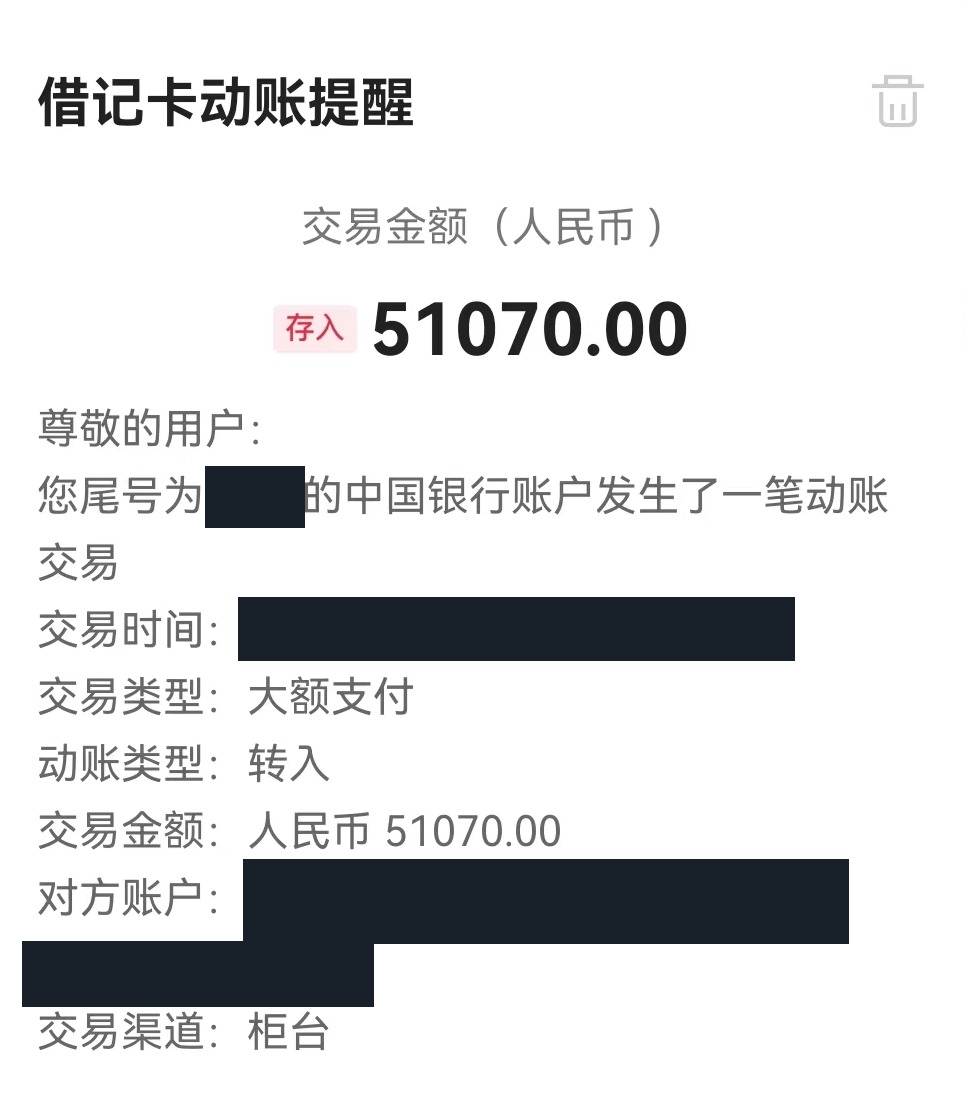
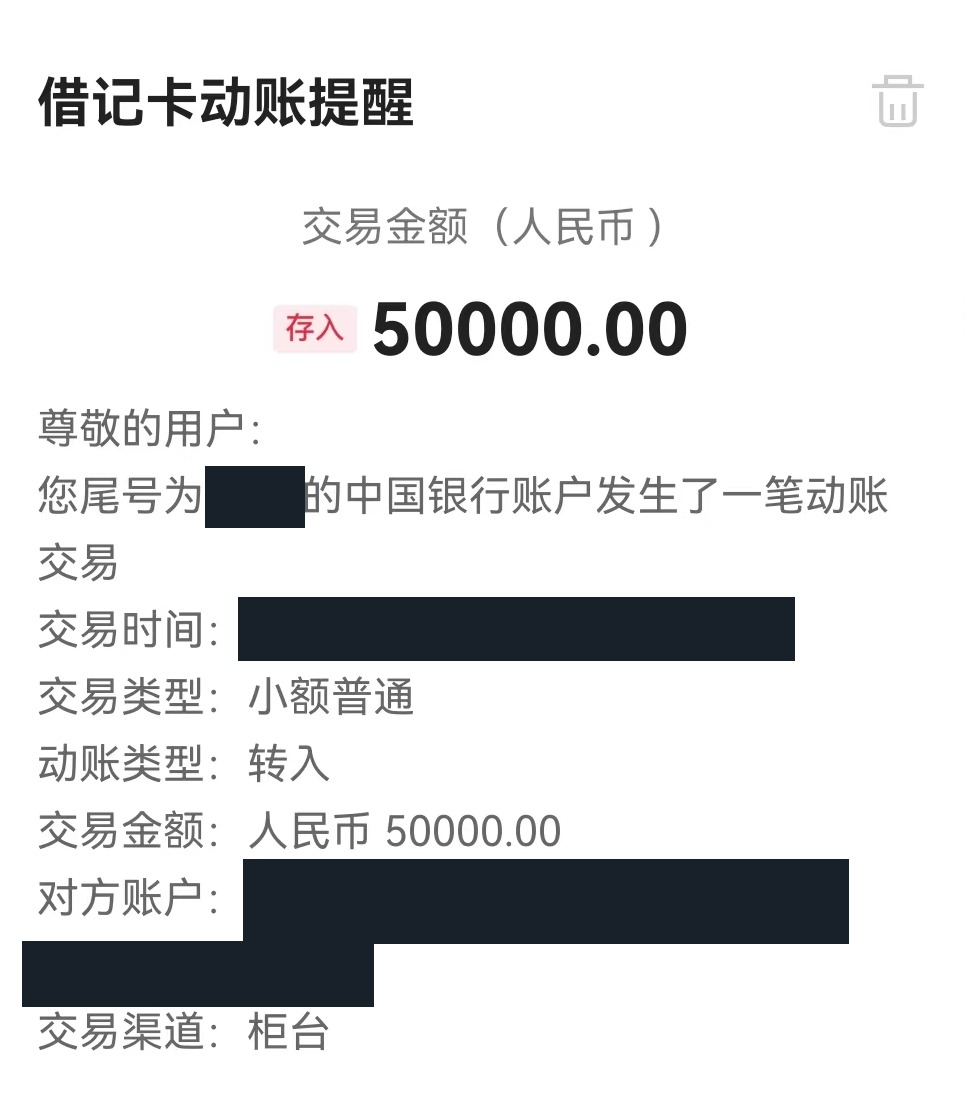
The enforcement judge adopted the team’s proposals, and the matter progressed to payment. Two bank transaction notifications show receipts of RMB 51,070 and RMB 50,000. Together they record RMB 101,070 received. These entries make the result concrete: the case had moved beyond an uncertain enforcement position to payments reaching the creditor.
The two notifications establish the amounts received; they do not, by themselves, allocate each payment between principal, interest and other components. No such allocation is needed to understand the practical result. File review, a targeted account-inquiry proposal, a realistic property assessment and continued engagement about performance formed the strategy, while the bank notifications show the resulting recovery in identifiable payments.
 View larger image (new tab) ↗
 View larger image (new tab) ↗
Choosing the work that fits the case
Shanghai Shenxin Law Firm’s enforcement practice in mainland China places emphasis on choosing work that responds to the actual obstacle. This case illustrates that judgment. The team did not equate a preserved property with an assured recovery, nor treat the existing search results as a complete answer. It examined the file and brought a specific, coordinated proposal to the enforcement court.
For creditors, the practical lesson is to ask what each available step is expected to resolve. A property sale, an account inquiry and a discussion about compliance serve different purposes. Their value depends on the facts and on how they fit together. In this matter, that assessment helped turn an uncertain enforcement position into RMB 101,070 received.
These case notes are anonymised. Individual outcomes depend on the facts, available assets and applicable procedures; past results do not guarantee future recovery.