A recognised debt, but no straightforward payment route
The creditor had advanced a loan for the debtor’s business working capital and obtained a judgment requiring repayment of the loan and interest. Yet a favourable decision did not produce a straightforward route to payment. A property transfer complicated the asset position, bank accounts showed no substantial balance, and the debtor repeatedly failed to attend court when summoned. These obstacles made further investigation necessary.
For our enforcement team, the immediate question was how to move from a recognised legal obligation to a practical basis for performance. Repeating the demand for payment would not, by itself, explain the debtor’s financial position. The matter required evidence that could help the court assess the available next steps and allow discussions about repayment to proceed on a firmer factual foundation.
Why the account balance was only part of the picture
A low balance describes the funds visible in an account at a particular point. It does not explain all the money that has passed through that account or through other payment channels. In this matter, the team extended the inquiry to WeChat and Alipay records. The purpose was to investigate financial activity relevant to enforcement, rather than assume that the absence of a substantial bank balance answered every question.
Transaction information also requires interpretation. A payment entry is not automatically an asset available for seizure, and a transfer does not alone establish unlawful conduct. The professional task is to connect a relevant entry to the debtor, the obligation and an appropriate procedural question. That distinction keeps an investigation focused and avoids presenting an untested suspicion as an established conclusion.
Obtaining records through the court-authorised process
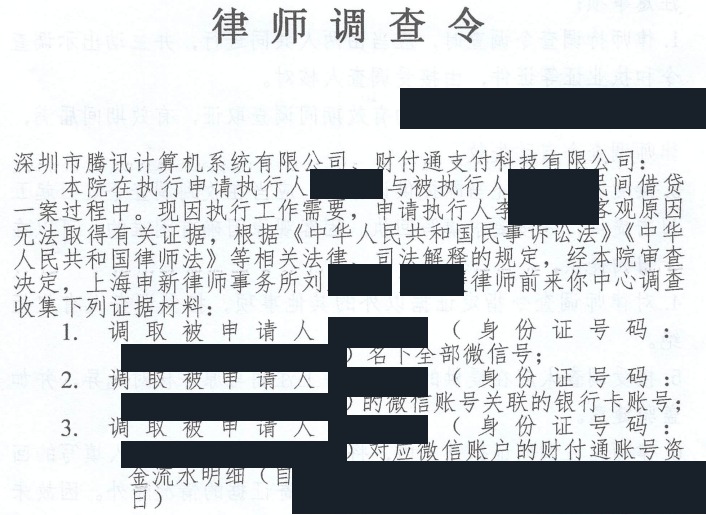
The team used lawyer investigation orders to obtain the WeChat and Alipay transaction records. This was an important connection between an investigative idea and material capable of supporting further work in the enforcement proceedings. The inquiry did not depend on the debtor volunteering an explanation or disclosing records informally; it proceeded through the authorised channel available in the case.
For this type of work, the scope of the requested information matters as much as the request itself. An investigation should address a concrete issue, while the resulting records must be read in context. Our focus in mainland Chinese enforcement is on making the investigative work useful to the next decision: what the evidence supports, what still needs checking and what request can properly be put before the court.
 View larger image (new tab) ↗
Turning the investigation into a specific application
Following the investigation, the team applied to the enforcement court for referral to the police concerning suspected refusal to comply with a judgment. This connected the financial inquiry to a defined procedural request. The application placed the relevant issue before the judicial authorities for review; it was not itself a finding that a criminal offence had been committed.
Civil enforcement and the examination of suspected criminal conduct involve different questions. A creditor’s wish to recover money cannot replace the evidence required for a particular measure. The case demonstrates the value of identifying the appropriate channel and submitting a request supported by the investigation, while leaving decisions within the powers of the competent authorities to those authorities.
A settlement that translated into money received
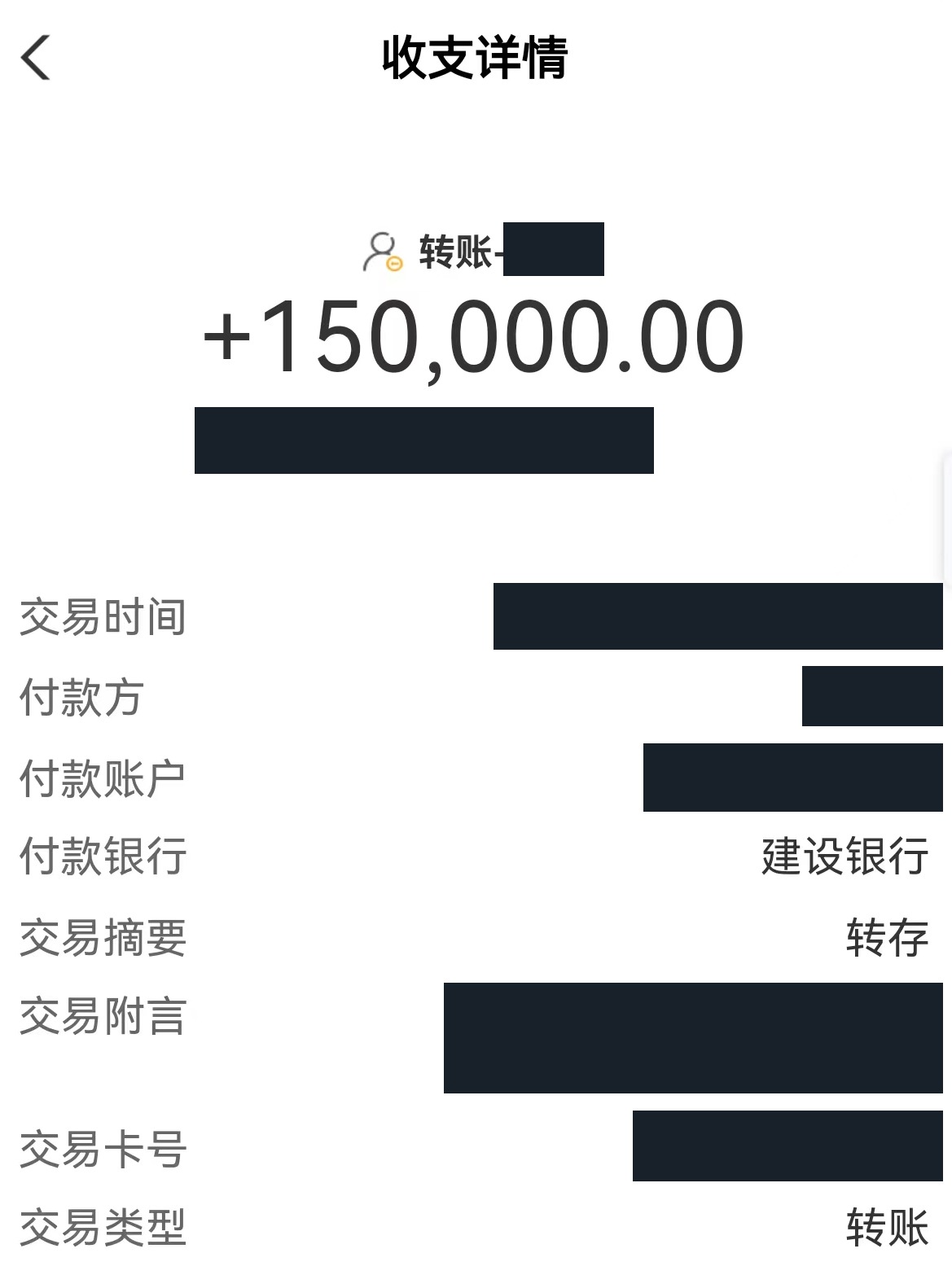
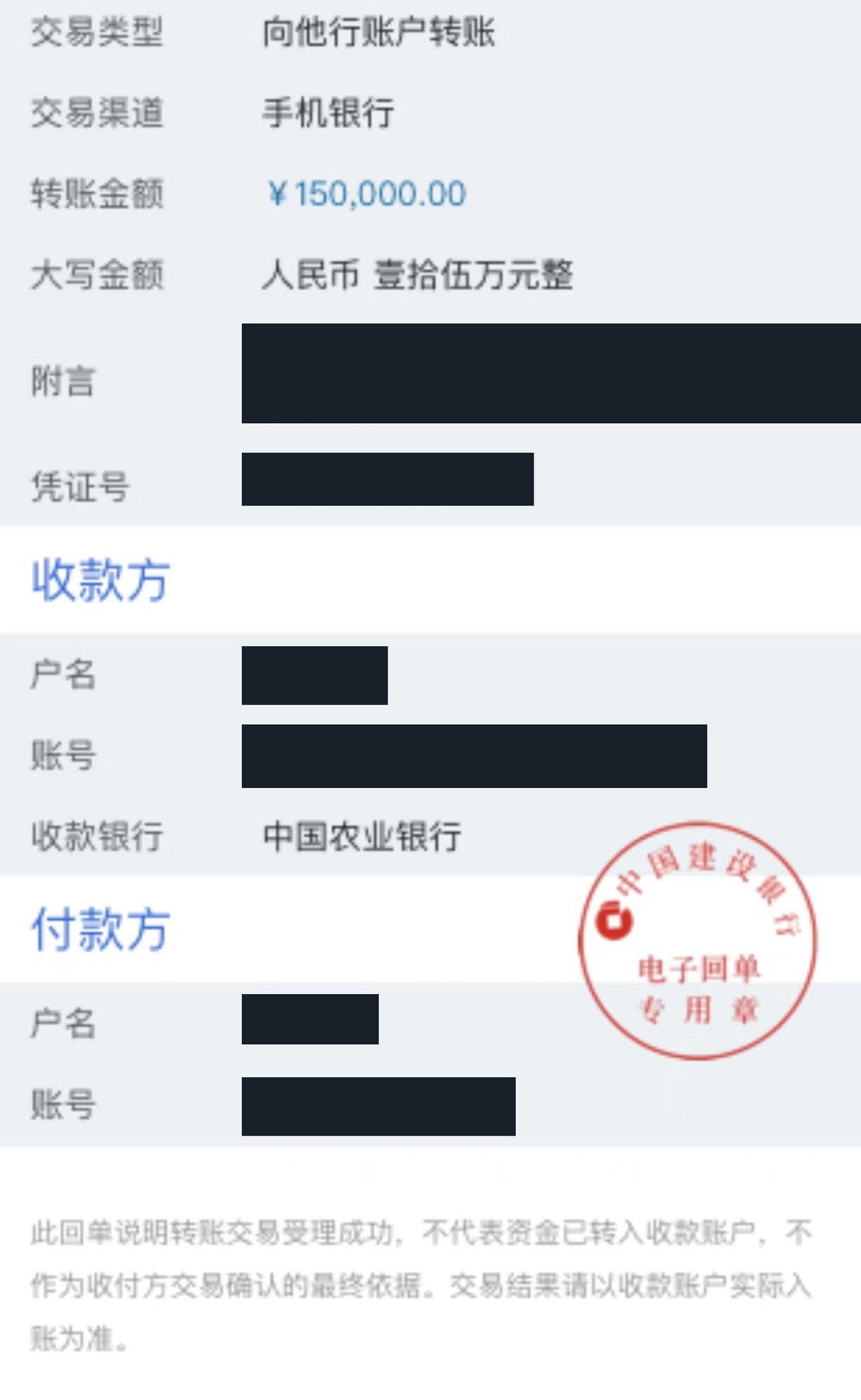
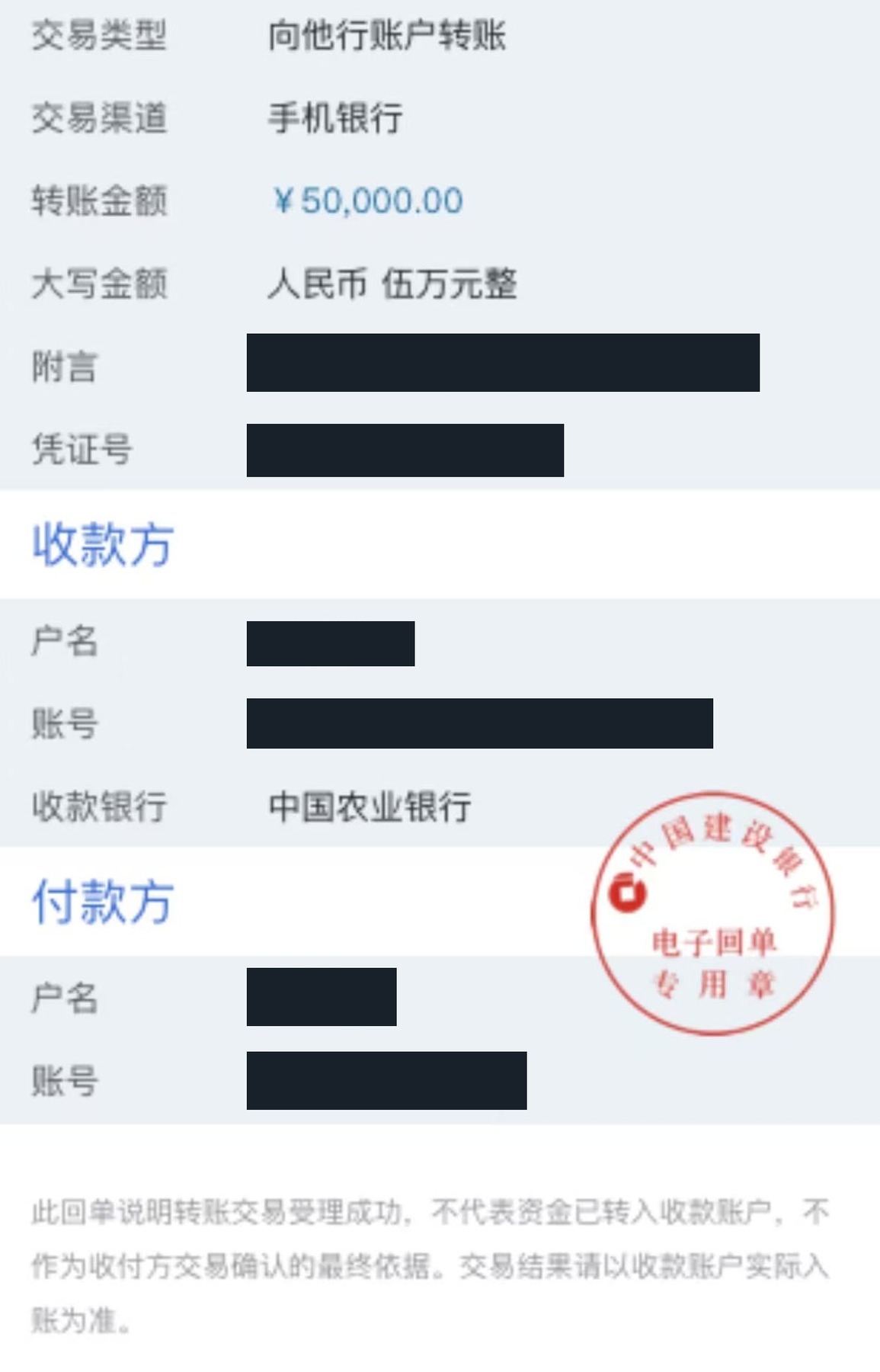
The enforcement judge adopted the team’s proposals, and the matter progressed through a written enforcement settlement for RMB 350,000. Three payment records show RMB 150,000, RMB 150,000 and RMB 50,000 respectively, together matching that settlement amount. The agreement and the payment records show different but connected parts of the result: the obligation to perform and the money actually paid.
A settlement is valuable to a creditor when it leads to performance. Expressions of cooperation, discussions about terms and a signed arrangement are different from money actually received. In this matter, matching the three payments with the written settlement gives a concrete account of how the recovery was completed under that arrangement. The original loan, the judgment debt and the settlement payment remain distinct amounts; the recovery achieved here was RMB 350,000.
 View larger image (new tab) ↗
 View larger image (new tab) ↗
 View larger image (new tab) ↗
Keeping investigation, procedure and performance connected
The contribution in this matter was the connection between several kinds of work: identifying a further payment-information source, obtaining the records through investigation orders, advancing a court application and following through towards performance. Each stage had a purpose in the overall strategy. The investigation supplied material for the procedural work, and the procedural work supported the continued pursuit of a practical recovery.
That connection is particularly important when an enforcement matter has lost momentum. More documents are not necessarily better documents, and more applications do not necessarily create a payment route. A useful strategy identifies the obstacle being addressed by each step and revisits the position as new information becomes available. In this case, the payment-record inquiry became part of a route that produced an actual settlement payment.
The enforcement capability behind the outcome
Shanghai Shenxin Law Firm’s enforcement practice focuses on the practical work required to realise claims in mainland China. This case reflects that approach through financial investigation, court-facing applications and the pursuit of performance. The role of the lawyer is not limited to communicating that a debt remains unpaid; it includes identifying what can be investigated and presenting an actionable, evidence-based next step.
For a creditor facing a similar obstacle, the starting point is a careful examination of the enforceable decision, the work already completed and the asset information still available for inquiry. The next step must fit that particular record. In this matter, looking beyond the visible bank balance helped the team move a difficult loan recovery towards a tangible result.
These case notes are anonymised. Individual outcomes depend on the facts, available assets and applicable procedures; past results do not guarantee future recovery.