An established trade claim still needs a recovery route
The dispute arose from goods supplied without the agreed payment. The supplier obtained a judgment for the price and interest, but the debtor continued to claim an inability to pay during enforcement. Several other enforcement matters and concerns about asset transfers complicated the creditor’s assessment of the prospects of recovery.
The judgment answered the question of liability. Further work was needed to understand where funds moved and which information could support action through the courts. Shanghai Shenxin Law Firm’s enforcement team therefore focused on financial activity rather than another general demand for payment. The aim was to obtain records that could identify a supported next step in this particular matter.
Follow payment records into the wider financial picture
The team obtained WeChat transaction records through investigation orders and pursued the financial leads they revealed. Payment-platform and bank records may describe different parts of the same financial activity. Reading them together can raise questions that a current account balance alone would not answer. The investigation in this matter extended from individual records into further account activity.
The value of transaction analysis lies in the questions it helps resolve: where funds went after receipt, whether particular dealings recur and how the activity relates to the debtor’s performance position. Here, investigation identified substantial activity in an account at a rural credit institution. That finding supplied a more specific basis for further work than the general assertion that payment was impossible.
Examine activity during enforcement in its proper context
An important lead was that transactions continued during enforcement. When a debtor asserts an inability to perform, such activity merits examination because it may illuminate the use of funds and the financial position. Transaction volume, an account balance and assets available for execution are distinct concepts. Adding together transfers does not establish an amount that can simply be collected.
Analysis must therefore consider the nature of the dealings, ownership of the funds and the way the records fit together. The team used the identified leads to advance the matter rather than treating a single unusual entry as proof of every disputed issue. This attention to context makes financial investigation more useful when its findings are carried into court proceedings.
Connect the investigation with appropriate court procedures
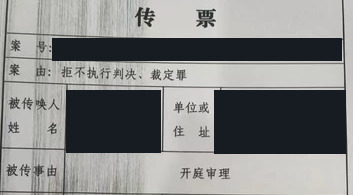
The team’s work included restrictions on high consumption and a private prosecution concerning alleged refusal to comply with a judgment. The investigation and proceedings served connected functions: financial records identified concrete issues, while the relevant procedures provided a route for their examination. Any determination of criminal liability requires the competent authorities’ assessment under the applicable process.
Account activity requires verification before it supports further conclusions, and bringing a private prosecution does not establish criminal liability. Organising the material therefore requires precision about what each item can demonstrate. Shanghai Shenxin Law Firm’s team linked the asset investigation with the relevant judicial procedures while continuing to focus on whether the debtor actually performed the payment obligation.
 View larger image (new tab) ↗
Distinguish the agreed instalments from money received
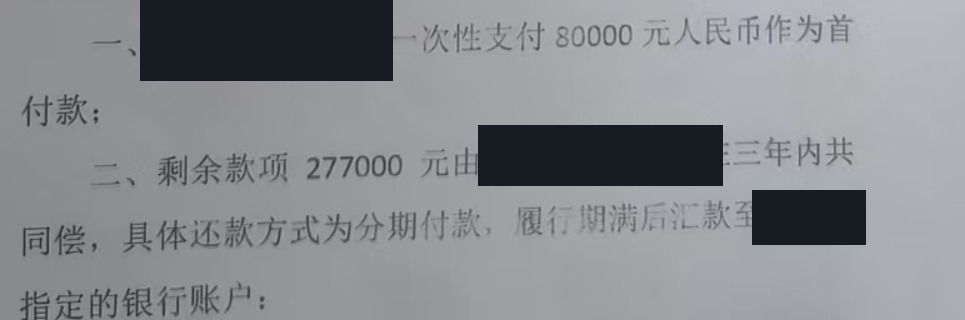
As the investigation and proceedings advanced, the debtor became willing to discuss a resolution. The enforcement settlement agreement provided for an initial RMB 80,000 payment and the remaining RMB 277,000 by instalments, making an agreed total of RMB 357,000. The arrangement translated willingness to pay into amounts and a structure against which subsequent performance could be assessed.
The case has achieved RMB 350,000 in recovery, with remaining performance under follow-up. Agreed terms and actual receipts have different evidential roles: the agreement is not itself a payment receipt. For a business creditor, counsel needs to follow the initial payment, the remaining arrangement and actual performance, assessing further procedural options if circumstances change. Engagement and agreement are meaningful stages, while funds received are counted as recovery.
 View larger image (new tab) ↗
Maintain a defined strategy when several claims intersect
Several enforcement matters can leave information dispersed and make it harder for a creditor to assess the remaining options. A defined strategy gives the work an order: identify financial or behavioural leads worth checking, assess which material supports an application, and follow the relationship between procedural progress and actual performance.
Competing claims do not themselves establish that payment can be achieved, and an active account does not guarantee sufficient assets for every creditor. This matter illustrates the value of targeted investigation when the apparent asset position is unpromising. The team carried the resulting information into proceedings and negotiations. Progress arose from that connection between tasks, rather than from an assumption that any single measure would necessarily produce repayment.
Keep the work directed towards actual recovery
Shanghai Shenxin Law Firm’s enforcement team works on debt realisation in mainland China by connecting financial investigation, enforcement applications, related proceedings and performance management. This matter moved from WeChat records to bank activity, from identified leads to procedural action, and then to RMB 350,000 received. That sequence illustrates the continuity the work requires.
For a supplier, recovery affects the funds available to the business. For counsel, each task should have an identifiable relationship to realising the claim. Following remaining performance is part of that responsibility and extends beyond the moment agreement becomes possible. Clear facts, an appropriate procedural route and attention to payment are the practical elements of the service reflected in this case.
These case notes are anonymised. Individual outcomes depend on the facts, available assets and applicable procedures; past results do not guarantee future recovery.