Re-establish the position after an uncompleted enforcement
The creditor held an effective mediation document confirming a loan debt, but the initial enforcement had ended without full recovery. Further work faced more than insufficient assets. Difficulty reconnecting the procedural history and an unclear response to the request for resumed enforcement complicated the next step.
Shanghai Shenxin Law Firm’s team reviewed the existing documents, previous applications and available leads to establish the current position. The immediate need was to distinguish what had already been done from what still required action. Continuing a closed enforcement matter needed a specific documentary and factual basis; the creditor’s continuing non-payment did not mean that submitting another request would automatically resolve every obstacle.
Clarify the route for applications, leads and investigation
The team prepared the resumption materials, checked and organised leads supplied by the client, and followed the matter through postal submissions, in-person delivery and procedural discussions. It also clarified how the request for resumed enforcement and applications for investigation orders would be handled in this particular matter. Those exchanges are not presented as a universal rule for every court.
Once the route was clearer, the content and status of the applications still required attention. Counsel followed receipt and handling of the materials so that an uncertain procedural position could be converted into identifiable tasks. This phase of enforcement work consisted of sustained practical follow-up, creating the conditions in which the further investigation could move forward.
Check the enforcement basis and correct the stated amount
Further review identified an inconsistency between an amount stated in the application material and the effective document and outstanding obligation. The team checked the enforcement basis and discussed correction with those handling the matter. In a case requiring procedural reconnection, an inconsistent basic figure could affect how subsequent requests were understood.
Principal, interest, payments made and the remaining enforceable amount need separate treatment based on the relevant document and actual performance. This case note does not use an unverified combined estimate to calculate a recovery percentage. The supported point is that counsel identified and addressed a basic documentation problem, giving the continuing work a clearer factual basis rather than carrying an inconsistent number forward.
Follow resumed enforcement with account investigation
After enforcement resumed, the team continued applying for and submitting investigation orders relating to WeChat, Alipay and bank information, obtained responses and prepared transaction analyses. It also reviewed the existing enforcement file, network inquiry feedback and account measures. The purpose was to identify information that could support a further concrete step, rather than simply increasing the volume of material.
Counsel followed freezing and renewal work and submitted applications concerning judicial detention and alleged refusal to comply. Some requested measures did not materialise or were not accepted. The account therefore distinguishes work undertaken from measures actually implemented, and it does not turn an application into an assertion that a court acted or that a criminal conclusion was reached.
Check each credit even where recovery is limited
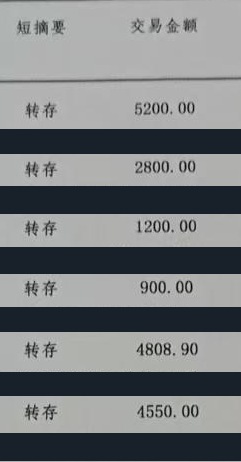
The newly supplied bank statement shows six credits associated with performance in the enforcement matter: RMB 5,200, 2,800, 1,200, 900, 4,808.90 and 4,550. Adding the original entries gives RMB 19,458.90. This case note uses that precisely documented figure, including the fractional amount, rather than a rounded reference in correspondence.
The recovery did not discharge the entire outstanding debt and is not described as completion of the case. It was nevertheless a concrete result in a matter that had previously ended without full recovery. Both the receipts and the remaining work need to be made clear. That recognises the value of money actually obtained without overstating how much of the creditor’s overall claim it satisfied.
Retain the six original amounts while protecting identity
The extract below retains the original amount and transaction-description columns. Account details, transaction dates, case identifiers and other identifying information have been removed or masked. The six amounts total RMB 19,458.90 and represent credits shown in the statement. They are distinct from an account balance, a frozen sum or an agreed future payment.
Keeping that distinction supports later calculation of the remaining claim and provides a common basis for communication with the client. Progress needs to be assessed not only by applications submitted, but also by money received and obligations still outstanding. The public account stays within what the original record supports, connecting the documented financial result with the professional work undertaken.
 View larger image (new tab) ↗
Continue managing the debt after partial recovery
Shanghai Shenxin Law Firm’s enforcement team continued organising asset information, following account measures and preparing material for possible further procedural steps. The matter moved into continued monitoring, with the next action depending on new leads and developments in performance. Partial recovery did not remove the need to manage the remaining claim.
This mainland China case illustrates the detailed work involved in resuming an uncompleted enforcement: reviewing the old file, checking figures, clarifying the application route, obtaining and analysing records, and verifying the credits. For a comparable matter, the existing documents, enforcement history, asset leads and receipt records form the basis for further advice. Keeping them connected makes both the direction of the work and its stage results specific and assessable.
These case notes are anonymised. Individual outcomes depend on the facts, available assets and applicable procedures; past results do not guarantee future recovery.