Repeated promises left the judgment unpaid
The creditor held a judgment confirming a loan debt, but that did not lead to straightforward payment. The debtor repeatedly proposed arrangements, changed the amount or timing and failed to complete promised performance. The practical question had moved from establishing entitlement to obtaining money under the recognised debt.
Shanghai Shenxin Law Firm’s enforcement team therefore had to address procedure and performance together. A statement that repayment was intended could not be treated as payment completed. Each negotiation needed to be considered against the amount actually received, the available asset information and the obligations still outstanding. That distinction shaped the continuing work on the matter and the way progress was reported to the client.
Pursue account measures and further investigative work
The team submitted applications concerning bank accounts and the debtor’s WeChat and Alipay accounts, and continued discussions with the enforcement court about account measures, default-related measures and material concerning alleged refusal to comply. The records also refer to the transfer of relevant refusal-to-comply material. Submission or referral is described as such, without presenting it as a criminal charge or conviction.
An account measure did not mean that a sufficient balance was available, and a procedural step did not ensure immediate payment. The team therefore continued checking asset information and the status of the work. The purpose was to identify the next supported action, rather than treating completion of one application as completion of the recovery task.
Assess settlement through performance and supporting arrangements
The parties discussed a settlement of RMB 200,000, including an initial payment, the remaining balance and supporting arrangements. An initially proposed first payment was later reduced because the debtor said the money could not be raised. That change made it necessary to distinguish a negotiating figure from demonstrated payment capacity.
Counsel participated in preparing the enforcement settlement documentation and continued examining the proposed personal and property-related support. The professional task was to turn an imprecise intention into obligations that could be followed, while identifying what further material would be needed for any associated procedure. A recorded obligation was still different from a completed recovery. Settlement amounts were therefore not counted as funds received merely because they had been discussed or written down.
Verify the first documented recovery of RMB 30,000
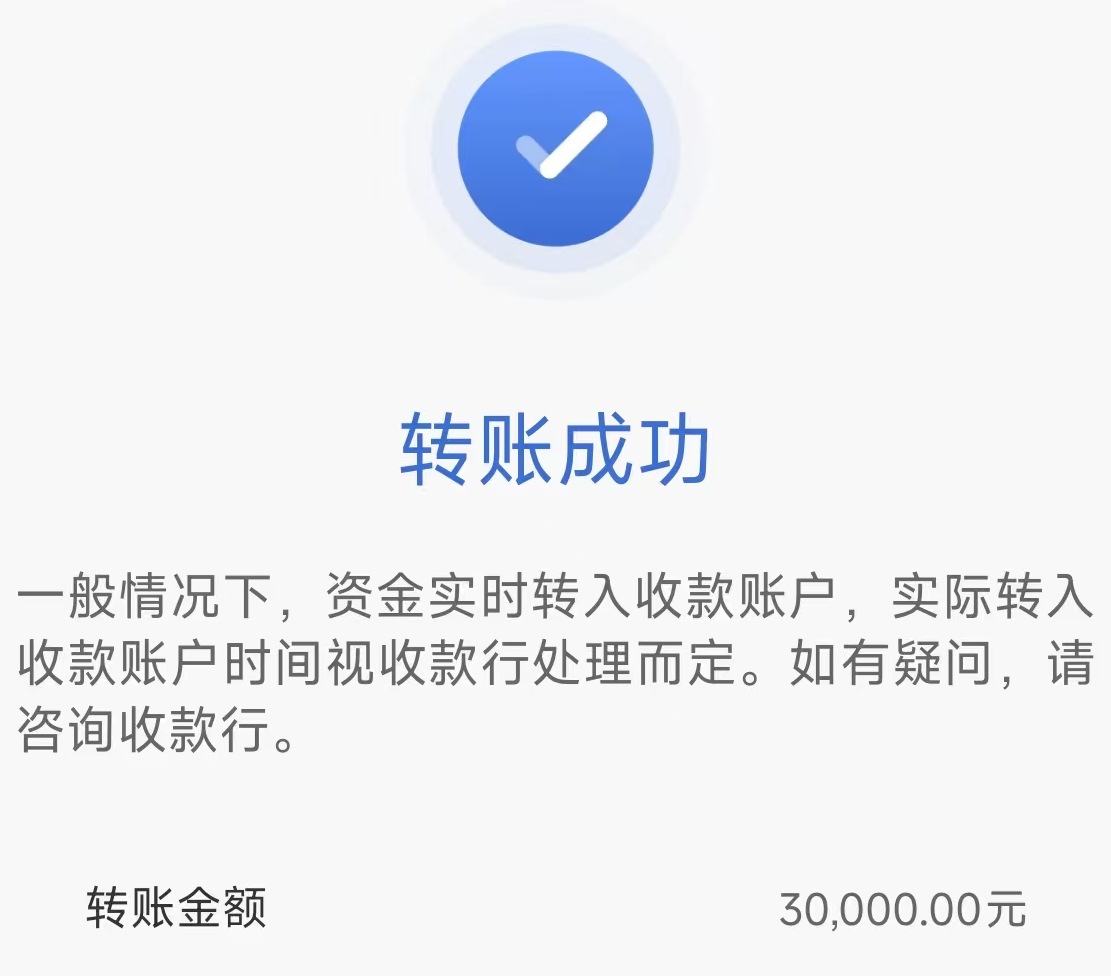
The newly supplied transfer screen shows a successful payment of RMB 30,000 to the client in this matter. The accompanying communication records the client acknowledging receipt and continuing to ask about the agreement. These materials support one another: they show both a specific transfer and a related acknowledgment by the creditor.
That payment is presented as partial recovery. It does not establish that the whole debt was settled or that every later promise was performed. The remaining obligations still required attention. In an enforcement matter, a stage result is valuable because it actually occurred and can be checked. Reporting it accurately also requires keeping the outstanding position visible, rather than allowing one successful payment to stand for the completion of the entire case.
Continue the work when the balance remains unpaid
After the initial payment, the debtor did not perform consistently with the proposed arrangement. The team continued contact and kept records, while pursuing matters including resumed enforcement and inquiries into accounts in another location. It also pursued an application concerning an additional party on the basis of the available documents and procedural material. Applications and unresolved questions remained separate from established outcomes.
Further work required more than repeating the same demand. Counsel needed to track whether documents had been received, whether leads had been addressed and whether the material required for the next step was complete. Shanghai Shenxin Law Firm’s contribution in this phase was continued attention to those specific tasks, so that the partial payment did not become the endpoint of the recovery effort.
The original transfer record identifies the amount achieved
The image below retains the original successful-transfer message and the amount of RMB 30,000. Names and account information have been removed by cropping. It documents a payment achieved in the matter; it does not substitute for the unpaid balance or a complete account of later performance. The partial recovery described here corresponds to this transfer and the client’s related acknowledgment.
Accurate recording is part of professional follow-through. The settlement figure, payments actually received, the balance outstanding and the materials submitted for further action need to remain distinguishable. That provides a common basis for decisions and communication. It also allows the client to understand both the value of the present result and the work that is still needed.
 View larger image (new tab) ↗
Partial recovery requires continued professional attention
Shanghai Shenxin Law Firm focuses on enforcement and debt recovery in mainland China. Where promises are repeated but payment remains inconsistent, the work includes both securing a concrete initial performance and continuing to address the obligations left behind. Asset inquiry, settlement documentation, receipt verification and procedural applications need to stay connected to the creditor’s objective.
This example concerns a real partial recovery within a continuing matter. For comparable cases, the judgment, enforcement history, agreements and payment records provide the basis for assessing further action. A clear distinction between completed and outstanding tasks makes that action more specific and the service more accountable. It also avoids presenting a limited financial result as if it had resolved every part of the debt.
These case notes are anonymised. Individual outcomes depend on the facts, available assets and applicable procedures; past results do not guarantee future recovery.